What is GMP?
GMP, or good manufacturing practice, is the set of guidelines that keeps products such as medicines at a high quality and free from contamination.
It is essential to patient safety and product quality. In this guide you will learn what GMP means, where it came from, and how it is put into place.

.avif)
GMP courses for every role
Operators, technicians, engineers and more


The most important things to know about good manufacturing practice
Good Manufacturing Practice (GMP) protects the quality of pharmaceutical products and the safety of patients by making sure products are free from contamination and are made under strict quality standards.
GMP involves careful documentation, systematic quality control and risk management through the whole production process, to secure compliance and product quality.
Putting GMP into place in production requires training and qualification of personnel, as well as documentation and validation of processes, to reduce errors and hold high quality standards in pharmaceutical products and medical devices.

What is good manufacturing practice?
Good manufacturing practice in short
GMP, or good manufacturing practice, is the term for the standards that govern manufacturing in pharmaceutical production, the life science industry and food companies. This set of rules and guidelines is what makes sure products are made consistently and under control, in line with quality standards. But why does it matter so much?
The history behind GMP
GMP is a central standard in the pharmaceutical and food industries. It secures quality, safety and compliance in production, risk assessment, and the correct handling of raw materials, packaging and finished goods. GMP was first introduced in the United States in 1963, after a series of scandals involving medicines that caused serious harm to health (Scilife). Those early GMP rules were put in place to protect the public from dangerous medicines, and to make sure pharmaceutical products were manufactured under controlled conditions.
Since then the standards GMP rests on have been widely extended and adjusted, to meet new challenges and new technology in manufacturing. That has allowed manufacturers to hold higher standards of safety and quality, and to document and validate their production processes better.
The founding principles of GMP
Documentation is a core part of GMP, which requires detailed records of every production batch so that everything can be traced. That documentation helps pharmaceutical companies reduce errors and reach higher product quality through strong compliance with the GMP guidelines.
Quality management under GMP means continuous monitoring of production processes and systematic inspection to confirm that standards are met. These principles help make sure finished products are free from contamination and impurities, and that every change to the production process is carefully controlled and documented.
GMP protects patient safety and the quality of medicine manufacturing. By following GMP, pharmaceutical companies make sure their products are free from contamination and impurities, and that they are produced and controlled under strict quality standards. That is not only a question of law, but of reaching higher product quality through rigorous documentation and adherence to instructions.
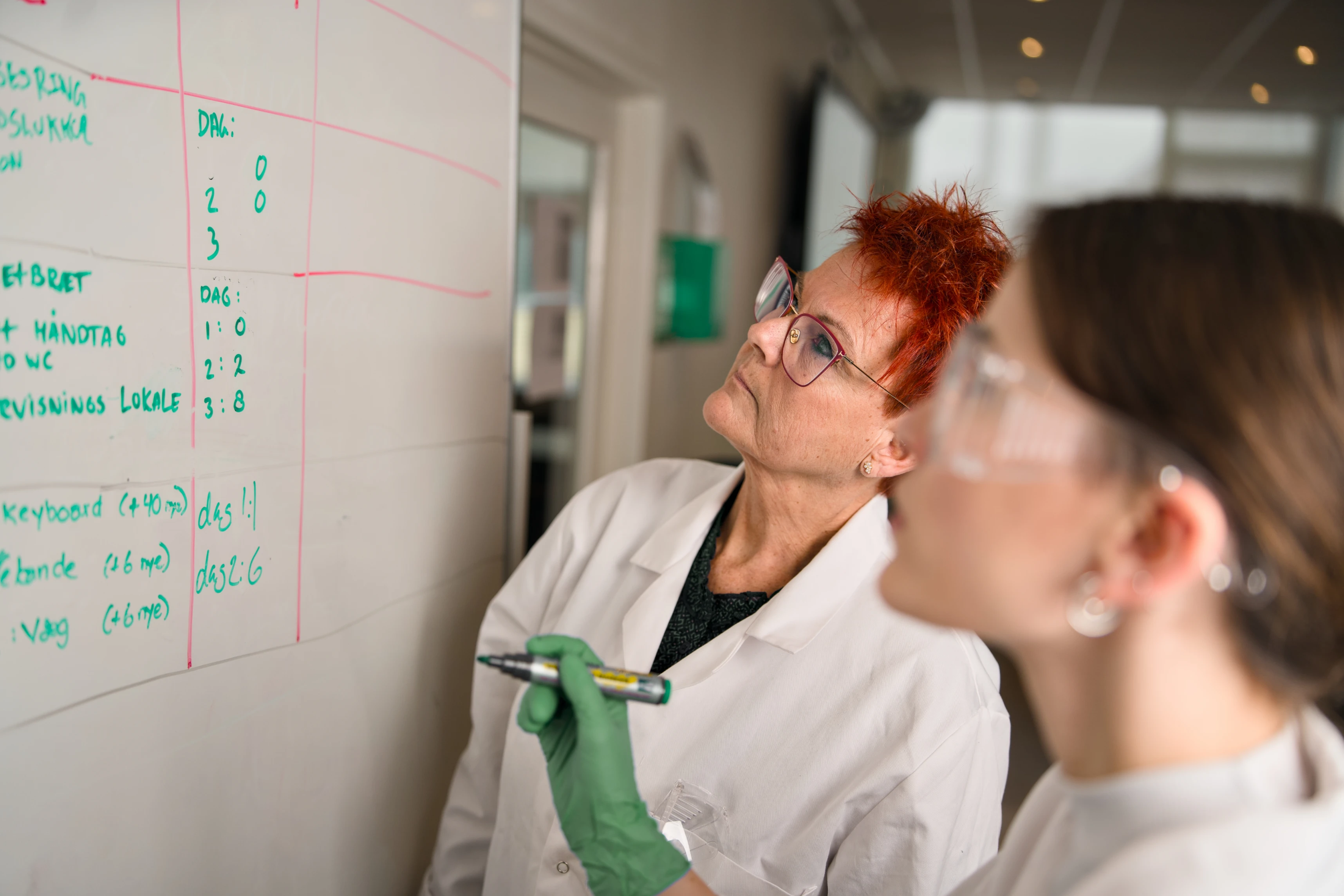
Good Manufacturing Practice (GMP) protects the quality of pharmaceutical products and the safety of patients by making sure products are free from contamination and are made under strict quality standards.
GMP involves careful documentation, systematic quality control and risk management through the whole production process, to secure compliance and product quality.
Putting GMP into place in production requires training and qualification of personnel, as well as documentation and validation of processes, to reduce errors and hold high quality standards in pharmaceutical products and medical devices.
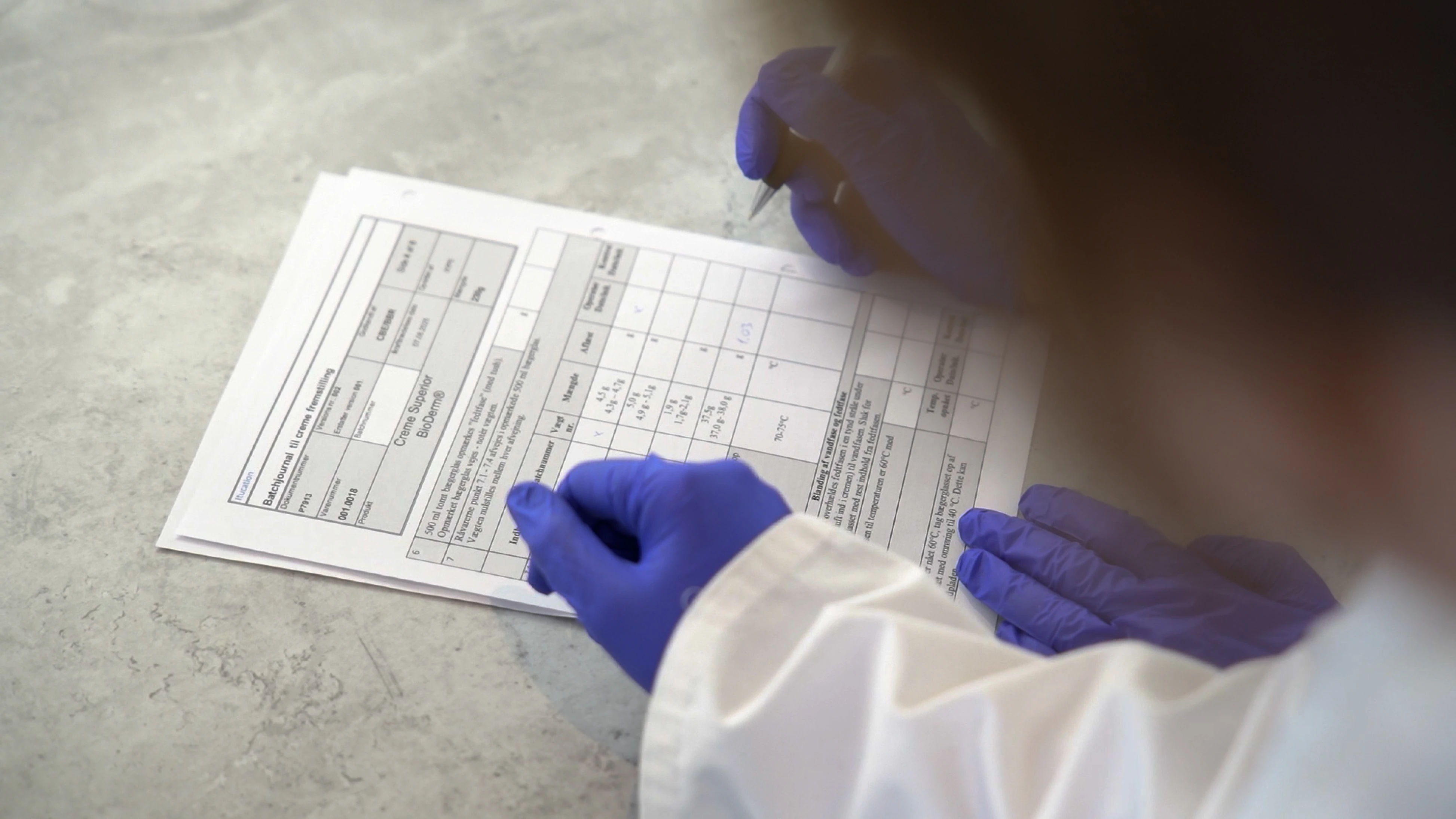
GMP rules: the requirements that secure quality in medicine manufacturing
GMP requirements in daily work
The GMP requirements are embedded in the Danish Medicines Act and its associated orders, which set the frame for manufacturing, control and distribution of medicines. These requirements make sure medicines are produced and controlled in line with quality standards, to guarantee safety, efficacy and quality.
Companies have to follow specific GMP requirements to secure product quality and safety. That includes approval procedures for production processes, for changes and for deviations, all of which are needed to hold high standards through the whole production process.
European GMP rules
The EU GMP rules are decisive for the safety, efficacy and quality of medicines. They are set out in EudraLex Volume 4, which includes the core chapters in Part I and the relevant parts of Annexes 1, 8, 9, 15 and 19.
The EU GMP guidelines are split into two main parts: basic requirements for medicinal products, and specific requirements for active substances. Becoming a Qualified Person (QP) or a QP delegate calls for thorough knowledge of these rules.
Danish GMP rules
The Danish authorities have set out the Danish GMP rules. They follow the EU GMP rules closely and are overseen by the Danish Medicines Agency. Although they generally follow the EU rules, there can be additional national requirements that companies have to meet.
The Danish Medicines Agency makes sure companies handle medicines in line with these orders, and carries out regular inspections to confirm compliance.
Putting GMP into place in production
Implementation, documentation and validation
Putting GMP into place in production takes careful planning, suitable facilities and equipment, and standardised working procedures. Knowing the requirements behind GMP is what lets a company identify and drive the quality assurance and quality control procedures it needs.
Every process has to be adjusted to meet GMP standards and to protect product quality through the whole manufacturing process. That includes continuous evaluation of production processes to find areas to improve, and making sure every employee follows the same procedures so errors are avoided.
Documentation under GMP calls for accurate and detailed records of every production process. It is a cornerstone of GMP, where every process and every change has to be documented accurately to secure traceability and adherence to standards.
Validating a process means confirming that it performs as expected and consistently delivers products of high quality. Preparing for external inspection calls for a thorough review and update of documentation and processes, to confirm the GMP requirements are met.
Quality control and risk management
GMP plays a central role in protecting consumers, by preventing contamination, errors and deviations in production. That is achieved through quality control, which includes regular inspection of products and equipment.
Risk assessment is a central part of GMP, where potential risks in the production process are identified and evaluated. Effective risk management means identifying those risks and putting measures in place to reduce them and protect product quality.
Self-inspection and inspections
Self-inspection is an essential part of GMP for confirming that standards are met. It helps companies find and correct errors early in the manufacturing process, before an external inspection. That includes regular internal audits, which are essential to staying in GMP compliance.
Companies describe how they check their own work on an ongoing basis, and how often they carry out self-inspection. That is decisive for holding high standards and for building real insight into the requirements.

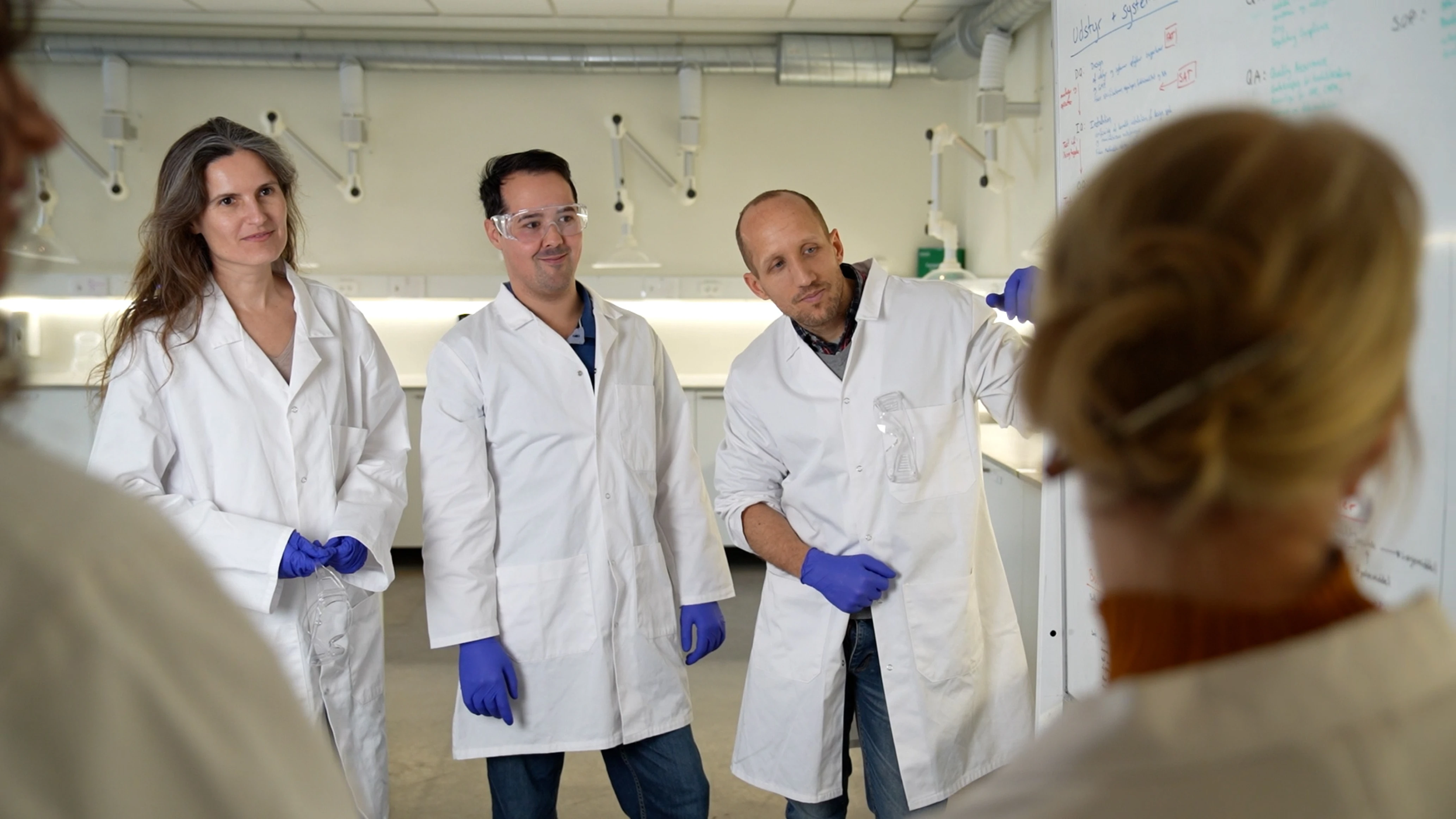
Training and qualification of employees in GMP
Education in the principles of GMP
Regular training of personnel is necessary for GMP production. Employees need to be taught the principles of GMP and to understand their own roles and responsibilities in the manufacturing processes.
Qualified personnel are what make a task performed the same way every time, which is necessary for holding GMP. It reduces variation in how the work is carried out and keeps quality high in production.
GMP courses
We run several GMP courses:
- Good Manufacturing Practice course
- Annual GMP training for companies
- Free GMP introduction and networking
We also run GMP for technicians and engineers, and GMP in laboratories and quality departments. Those two are taught in Danish only.
People who take a GMP course often go on to work in life science, in distribution or in the pharmaceutical industry. A large part of the staff in distribution, for example, make sure procedures meet regulatory requirements through administration. So not everyone who takes a course ends up manufacturing medicines. What a course gives you is insight into how the GMP requirements are met, and that opens up a wider range of work than people expect.
GMPkursus.dk and Itucation work together to hold GMP courses, where internal and external specialists teach the GMP rules and how they are met. The teaching covers the rules themselves, group discussion and real cases from Danish pharmaceutical production.
If you want to work in one of these industries, a GMP course is well worth taking.
Ongoing training and development
A word on the term certification. GMP certificates are issued by the Danish Medicines Agency to companies and production sites after inspection. No provider can certify an individual in GMP. What a participant receives is a course certificate, which the employer keeps in its training documentation and can show at an inspection.
Ongoing training matters, because the requirements keep changing and even experienced people need bringing up to date. Keeping a team current on the newest GMP standards is what holds quality and safety steady in production.
GMP when working with external partners
Contracts and shared responsibility
Working with external partners calls for a shared understanding of the GMP requirements, set out in contracts and agreements. That is what keeps every party working towards the same quality goals and meeting the regulatory requirements.
Companies have to carry out regular inspections and audits of their external partners to confirm they meet GMP. That is decisive for holding product quality and safety across the whole supply chain.
Supplier management
When it comes to supplier management, a thorough assessment of each supplier's ability to meet the GMP guidelines is essential. That means evaluating their capacity to deliver materials that live up to the GMP requirements.
To stay in compliance with GMP, some companies choose to work only with suppliers who are ISO or GMP certified, or who have a quality policy of their own. That helps secure manufacturing safety and product quality.
Outsourcing production
When production is outsourced, the external manufacturers have to be qualified and to follow the GMP requirements. That is achieved through clear specifications for quality control and a clear split of responsibility between the parties in the outsourcing agreement.
The contract giver's responsibility includes a thorough risk assessment and regular audit of contract acceptors, to confirm compliance with GMP. That is decisive for holding high quality standards and protecting patient safety.


Real-world examples of GMP in use
Improved product quality
Real-world examples of GMP in use show how it has improved product quality and patient safety in pharmaceutical companies and among manufacturers of medical devices.
One pharmaceutical company, for example, introduced strict documentation practice and quality control processes, which resulted in better product quality and greater patient safety.
Pharmaceutical companies
In the pharmaceutical industry, GMP has markedly improved the quality of medicines by enforcing strict standards for premises, equipment and the behaviour of personnel. A pharmaceutical plant that works to GMP can optimise its production process and reduce the risk of contamination.
Thermo Fisher Scientific, for example, has put GMP practice into its production of biological medicines, which has improved the quality of its recombinant proteins through GMP-compliant cell lines (Thermo Fisher). A large global pharmaceutical company has also seen roughly a 30% rise in laboratory productivity and roughly an 80% fall in deviations after moving to a digitally enabled laboratory (McKinsey & Company).
Medical devices
Manufacturers of medical devices use GMP to improve their production quality and stay in line with global regulation. By following GMP, a device manufacturer can make sure its products are safe and effective, which is decisive for patient safety and for trust in the products.
Several companies, for example, have improved their quality assurance systems and brought in advanced analytics and monitoring technology, which keeps them within the GMP rules and lowers the risk of errors and defective products (FDA).
Summary
This guide has covered why GMP matters in pharmaceutical production and the life science industry. We have looked at the history behind GMP, the founding principles, and the specific requirements in Europe and in Denmark. Putting GMP into place takes careful planning, documentation, quality control and training of employees. Working with external partners, and managing suppliers, matters just as much for holding standards high.
By following GMP, companies can be sure their products are of high quality and safe for patients. That is not only a question of meeting the law, but of reaching a higher standard of product quality and patient safety.
Frequently asked questions
about our GMP courses
Answers to what we are asked most often.
What kinds of GMP course are there?
There are several, from a foundational GMP course to process validation. They are all built to help you understand the GMP requirements and what meeting them asks of your own role.
What does quality control under GMP involve?
Regular inspection of products and equipment, to confirm that production stays consistent and meets the quality standards. It is what shows that the rules and standards are being met.
How do European and Danish GMP rules differ?
The Danish GMP rules follow the EU rules closely, but they can include national requirements, which the Danish Medicines Agency oversees.
Why does documentation matter in GMP?
Documentation is what secures full traceability and adherence to standards in the manufacture of medicines. It is a core component of GMP, and it requires detailed records of every production batch.
What is GMP?
GMP stands for good manufacturing practice. It is the set of standards that governs manufacturing in pharmaceutical production and the life science industry, and it is what guarantees product safety and quality.


We are here to help
Not sure about something?
Fill in the form and we will come back to you as soon as we can.